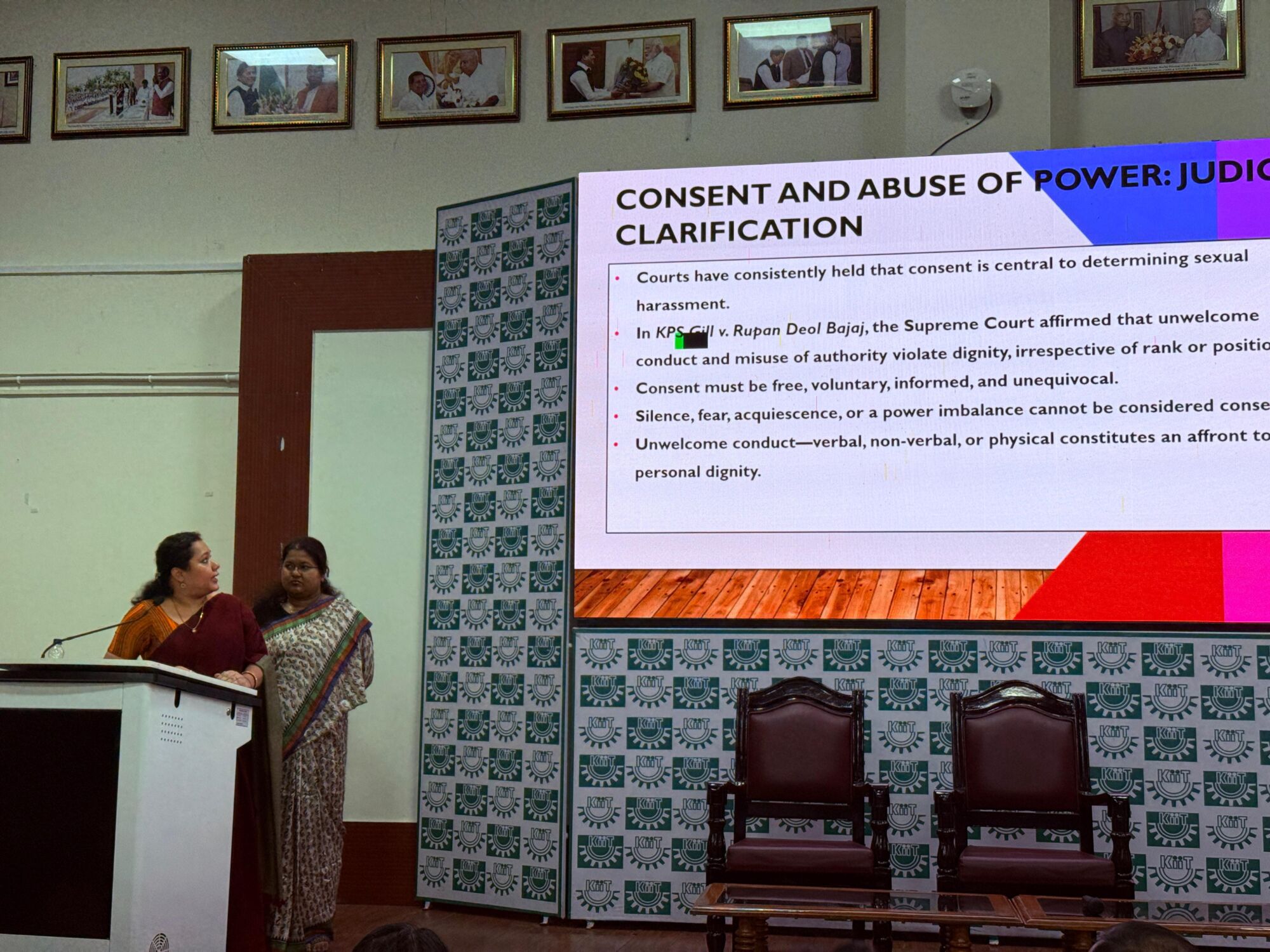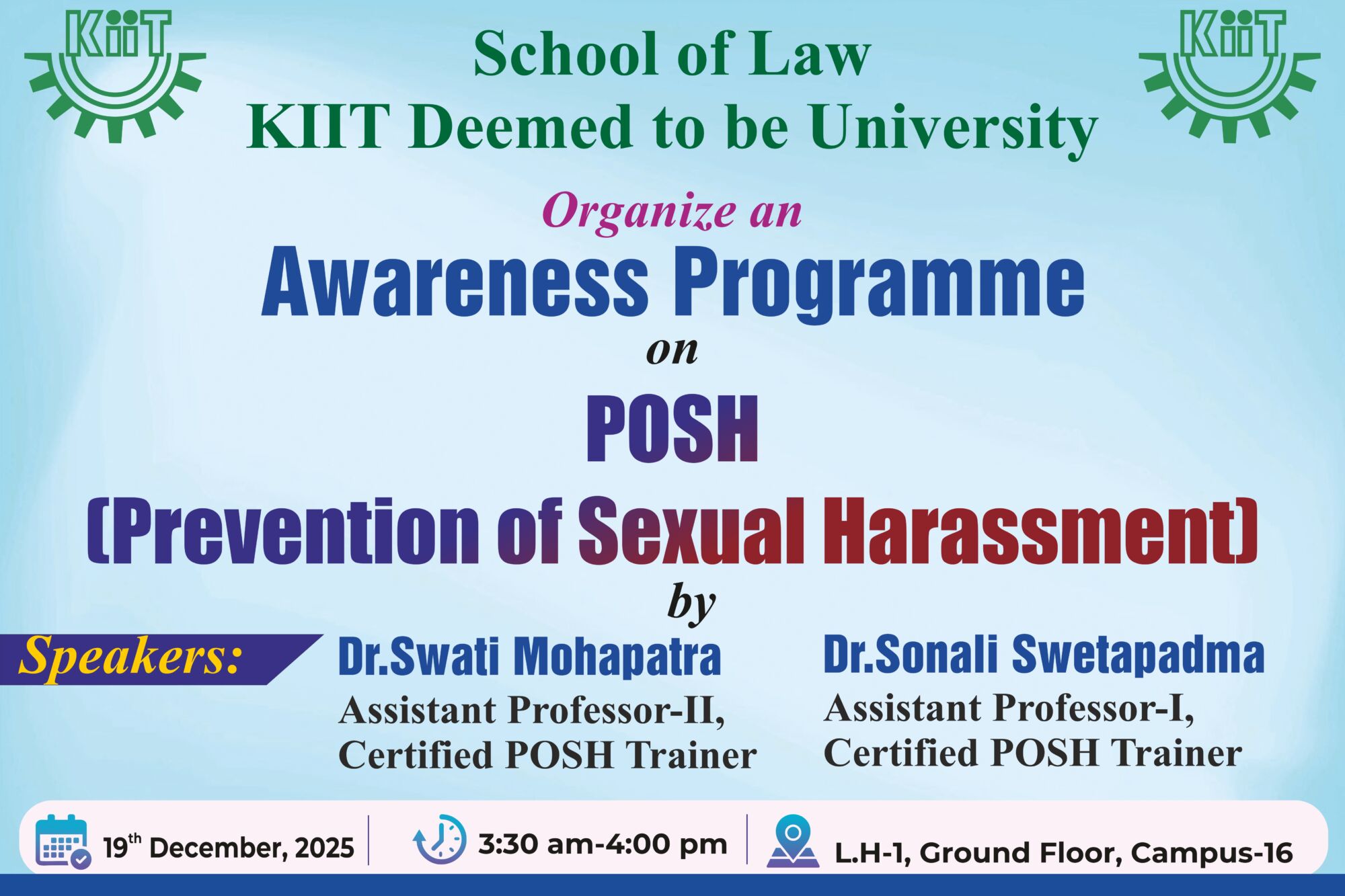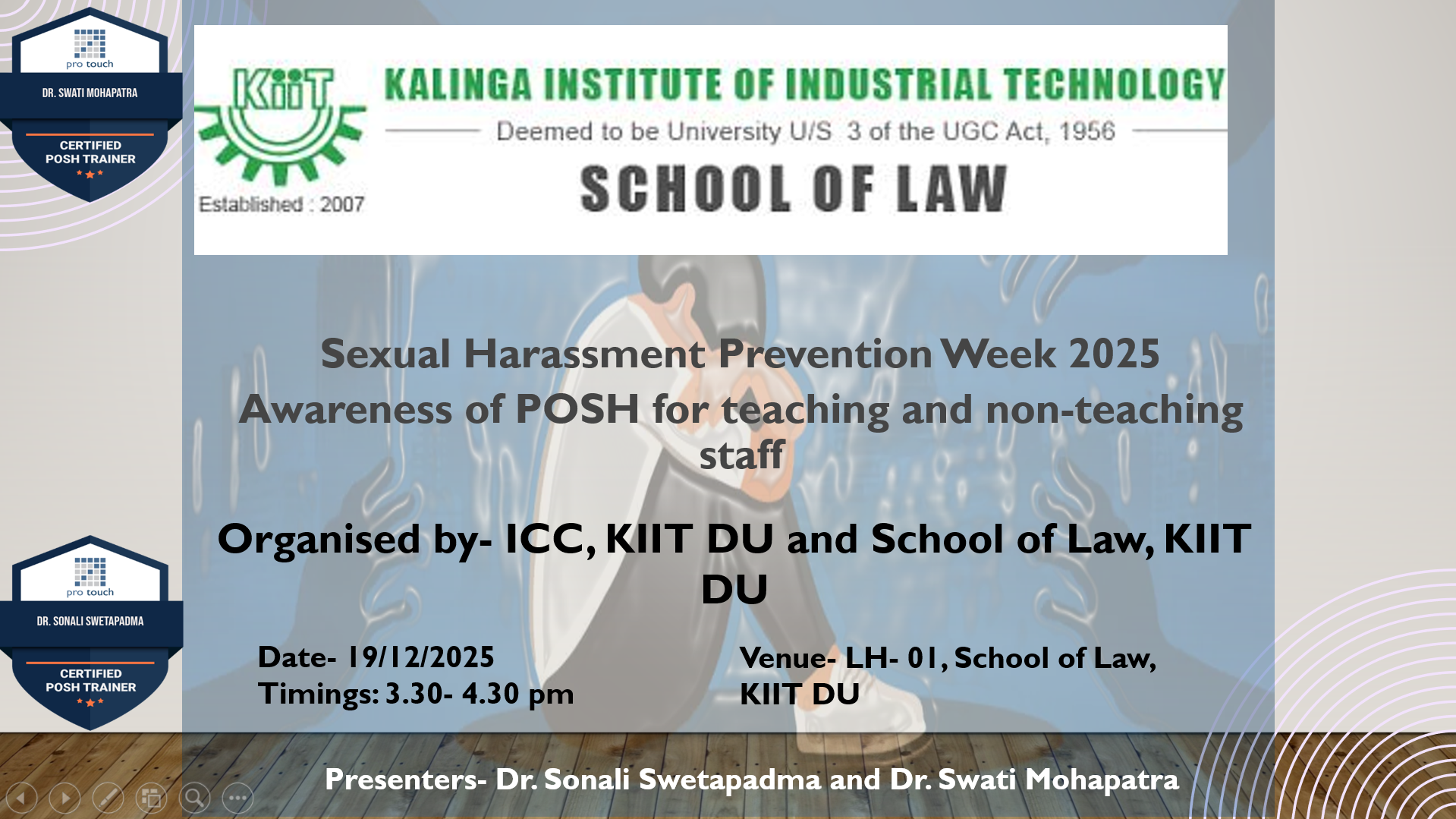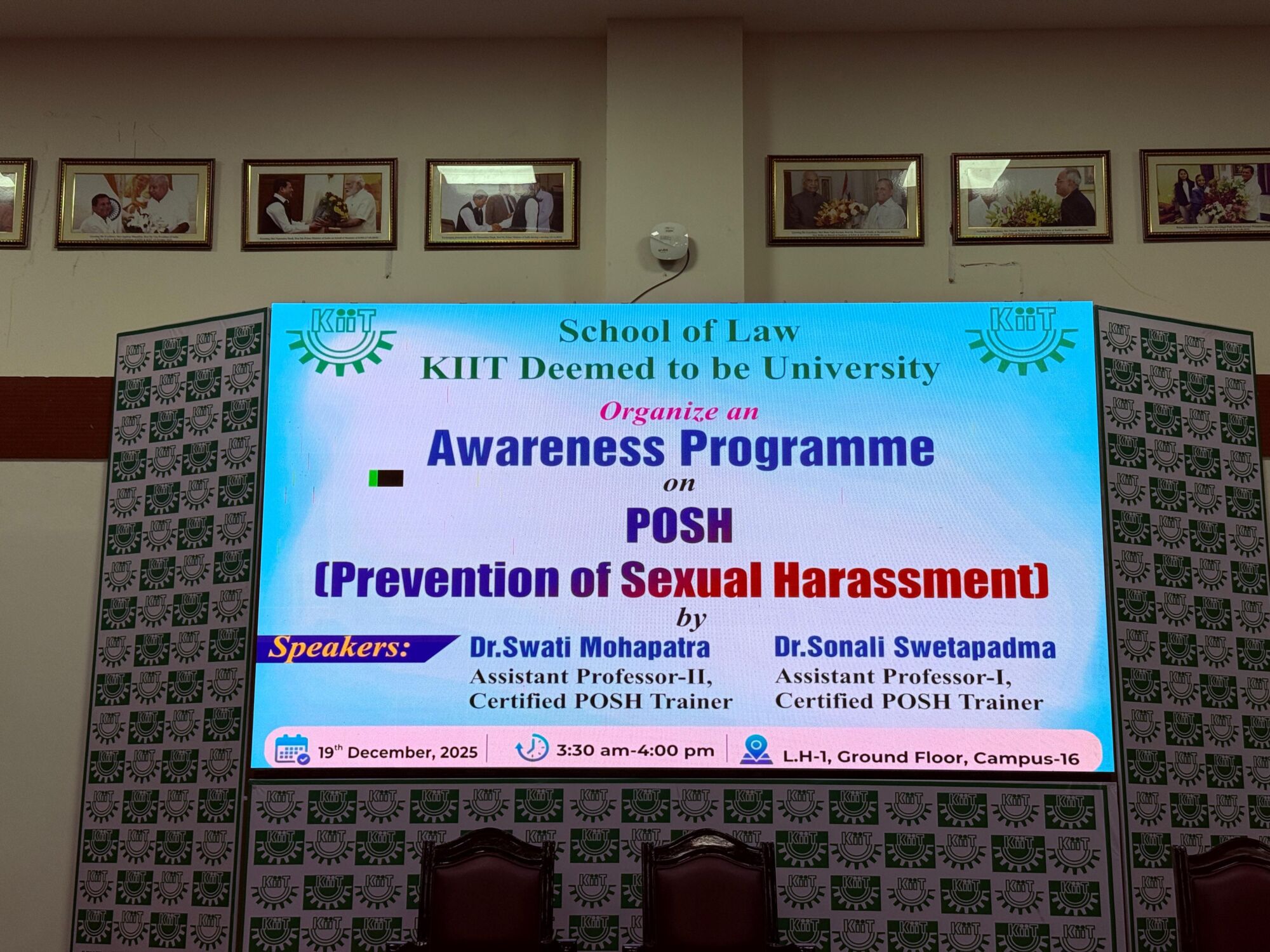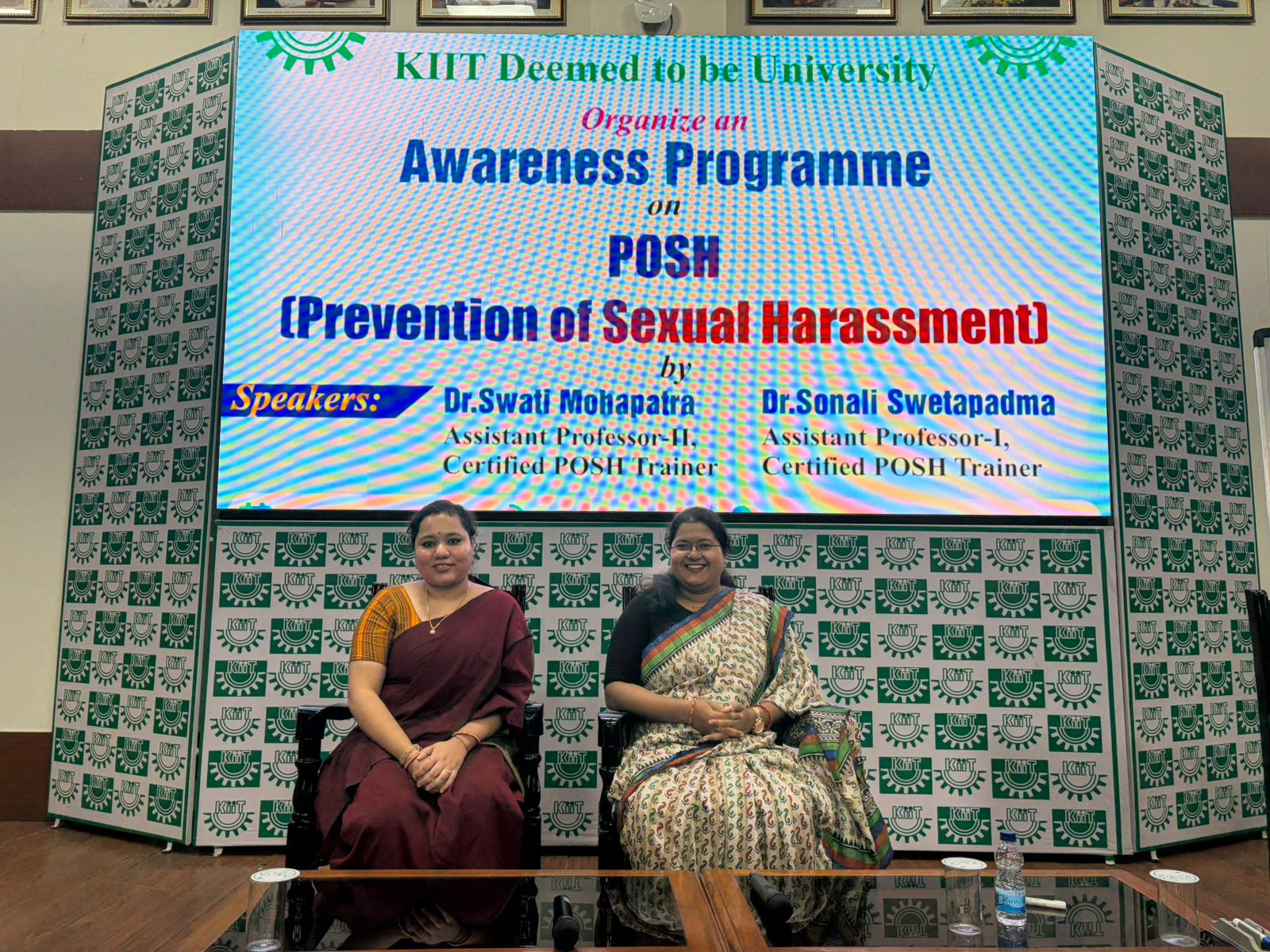

A training programme on the Prevention of Sexual Harassment (POSH) was conducted at the KIIT School of Law on December 12, 2025 in association with the Internal Complaints Committee(ICC), KIIT University. The session was led by two certified POSH trainers, Dr Swati Mohapatra, Assistant Professor II at the School of Law, KIIT Deemed University, and Dr Sonali Swetapadma, Assistant Professor I at the School of Law, KIIT Deemed University. The objective of the programme was to strengthen the understanding of POSH law among faculty, staff, and PhD scholars and to reinforce the institution’s commitment to maintaining a safe and inclusive working environment.
During the session, the trainers introduced the Sexual Harassment of Women at Workplace (Prevention, Prohibition and Redressal) Act, 2013. The session began with an interpretation of the word ‘Consent’ in a workplace setting. They explained that the Act was enacted to ensure secure working spaces for women and to uphold their fundamental rights to equality, dignity, and opportunity. The participants were taken through the legal definition of sexual harassment, which includes unwelcome physical contact or advances, demands for sexual favours, sexually coloured remarks, the showing of pornography, and any other unwelcome verbal or non-verbal sexual conduct. The trainers also discussed the circumstances that constitute sexual harassment, such as intimidation, threats affecting employment status, or behaviour that creates a hostile or unsafe work environment.
The presentation clarified key terms under the Act, including “aggrieved woman,” “employee,” “employer,” and “workplace.” It was emphasised that the Act protects women of all age groups, whether employed or not, and applies to a broad range of workplaces, including any place visited in the course of employment. The trainers highlighted that interns, volunteers, contractual staff, and temporary workers are also covered under the law. These discussions helped participants understand the wide applicability of the Act and the responsibilities that organisations must fulfil.
Another important aspect of the session was the explanation of the timelines and procedures involved in filing and addressing complaints. The Presentation stressed the importance of adhering to the timeline when filing a complaint. Participants were reminded that prevention is the most effective approach, and regular awareness programmes are essential for maintaining a respectful work culture.
Throughout the session, the trainers used case scenarios and discussion prompts to help the audience distinguish between POSH and non-POSH situations. Their approach encouraged participants to think critically about behaviour, boundaries, and workplace ethics. The session concluded with an emphasis on shared responsibility, emphasising that every member of an institution plays a role in maintaining a safe and dignified environment.
At its heart, POSH recognises a fundamental truth: a woman has the right to work in a space free from fear, intimidation, humiliation, or retaliation. Safety is not a concession, and dignity is not negotiable. POSH is not a favour to women, nor a special protection granted out of sympathy. It is a legal and constitutional mandate that obligates institutions to create environments where professional and academic participation is possible without fear.
Every employer, administrator, faculty member, student, and staff member shares responsibility in upholding this mandate. The trainers emphasised that awareness of rights must go hand in hand with an understanding of duties—encompassing respectful conduct, accountability, and a zero-tolerance policy for harassment.
Overall, the training served as a crucial step in enhancing awareness and compliance at the KIIT School of Law. It reinforced the message that POSH is not just a legal requirement but a collective commitment to respect, equality, and well-being on campus.
Prof. Sanghamitra Patnaik, Chairperson, ICC further advanced the discussion by speaking about the importance of creating safe wokplaces for women. The programme ended with a thank-you note from Mr. Prateek Mishra,Assistant Professor- I, School of Law-cum-member ICC.