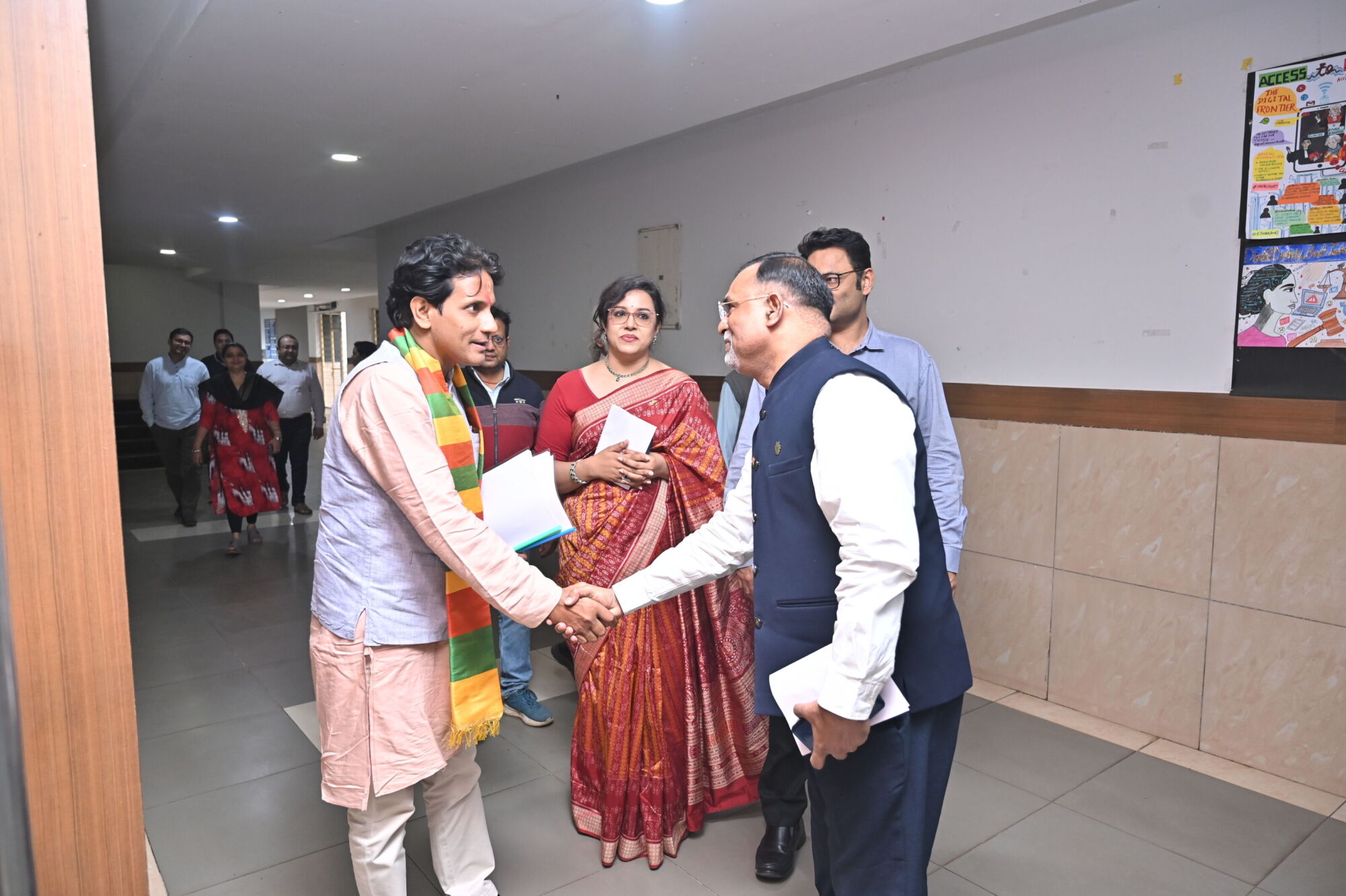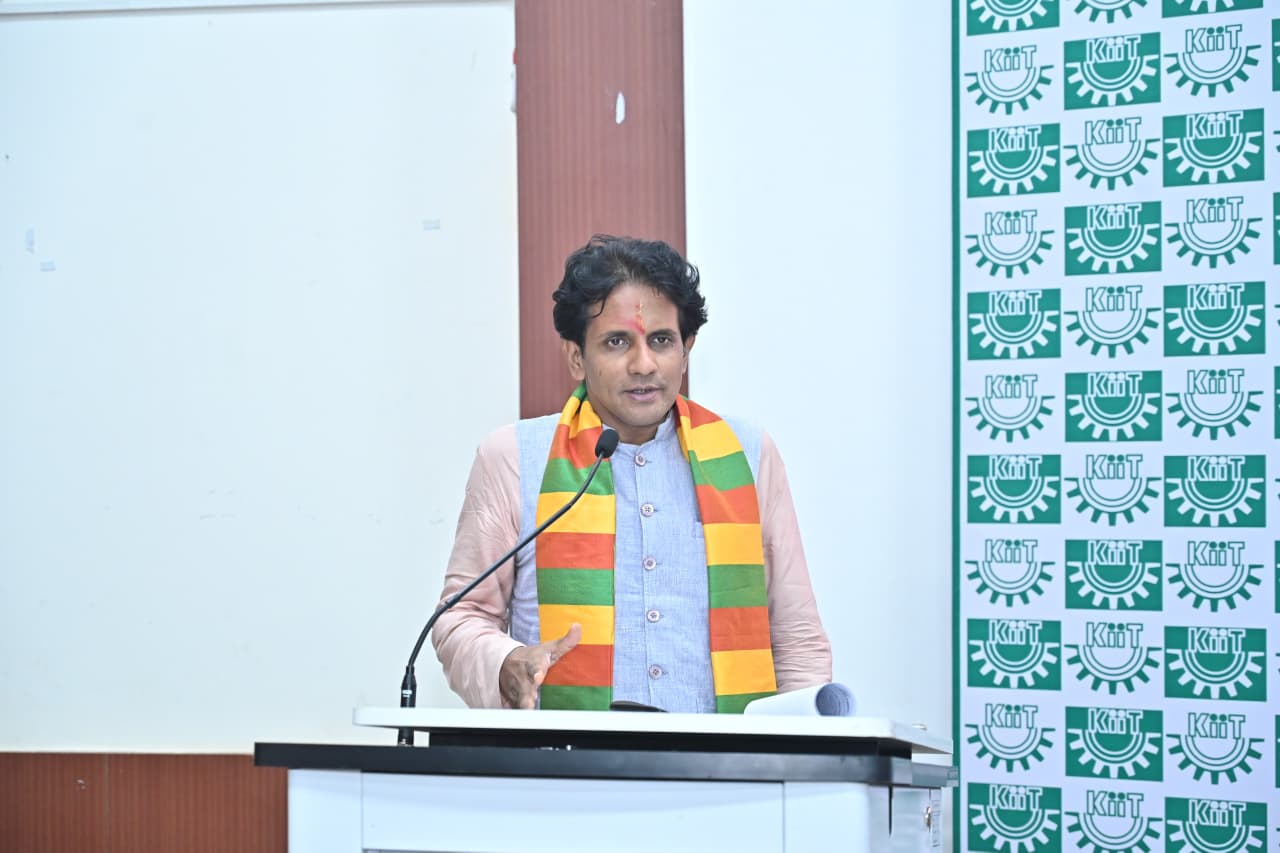

A special interactive session on “Budget 2026 and Indo–US FTA” was organised at KIIT School of Law on 10th February 2026. The session was delivered by noted author and National Spokesperson of the Tuhin A. Sinha. It brought together students and faculty members for an engaging discussion on the Union Budget 2026 and the evolving India–United States trade architecture, including the recently announced interim trade agreement framework.
Mr. Sinha contextualised Budget 2026 within the Government’s broader vision of a “Yuva Shakti–driven” growth strategy and the national objective of building a developed “Viksit Bharat” by 2047. He highlighted the Budget’s strong emphasis on public capital expenditure, infrastructure-led regional development, the creation of City Economic Regions, and new transport corridors. According to him, these measures reflect a long-term, growth-oriented approach rather than a short-term, populist exercise. He explained how sustained capital expenditure is intended to crowd in private investment, enhance productivity, and promote balanced regional growth, particularly across Tier II and Tier III cities.
Addressing the social and developmental dimensions, Mr. Sinha underlined the Budget’s focus on youth empowerment, employment generation, and human capital development. He referred to skilling and entrepreneurship initiatives, including the recognition and encouragement of the “Orange Economy,” aimed at leveraging India’s demographic dividend.
Turning to the Indo–US trade trajectory, Mr. Sinha described the emerging Indo–US Free Trade Agreement (FTA)/Bilateral Trade Agreement (BTA) process as a strategic extension of India’s growth narrative. He referred to the 2025 understanding to work towards a bilateral trade agreement with a trade target of USD 500 billion by 2030, and the February 2026 interim trade agreement framework, which has contributed to de-escalating trade tensions and paving the way for broader liberalisation. He observed that the removal of additional US tariffs on Indian imports, along with India’s calibrated approach to market access in selected sectors, reflects mutual confidence and a shared intent to strengthen supply chains and technology partnerships between the two democracies.
Mr. Sinha further emphasised the trade and investment opportunities that a deeper Indo–US FTA framework could unlock for India. He pointed to potential gains in high-technology sectors, digital trade, services, and advanced manufacturing, as well as enhanced US participation in India’s infrastructure and green energy initiatives envisaged in Budget 2026. At the same time, he acknowledged the need to carefully manage domestic sensitivities in sectors such as agriculture and MSMEs, stressing that India’s negotiating strategy seeks to balance global economic integration with the protection of rural livelihoods and small business resilience.
Throughout the session, Mr. Sinha highlighted the complementary relationship between a forward-looking domestic budget and an ambitious external trade agenda. He argued that investments in infrastructure, human capital, and regulatory simplification strengthen India’s credibility as a partner in high-quality trade agreements with advanced economies such as the United States.
The session concluded with an interactive exchange, encouraging students and researchers to view Budget 2026 and the emerging Indo–US FTA not as isolated policy developments, but as interconnected pillars of India’s long-term aspiration to emerge as a trusted and influential participant in global value chains and a key contributor to a rules-based international economic order.